
A House That Has Hosted Legacy
Three Hundred Years in the Making
1728–1762
FOUNDATIONS
1728 — Chinn’s Ordinary
- Built by Joseph Chinn as a fieldstone tavern and stopping point along the Ashby Gap route
- Known as Chinn’s Ordinary, serving travelers, horsemen, and farmers
- Positioned along early trade and travel routes linking the Piedmont to the Shenandoah Valley
- Today, it is still the oldest surviving structure in Middleburg
1728–1762
FOUNDATIONS
1728 — Chinn’s Ordinary
- Built by Joseph Chinn as a fieldstone tavern and stopping point along the Ashby Gap route
- Known as Chinn’s Ordinary, serving travelers, horsemen, and farmers
- Positioned along early trade and travel routes linking the Piedmont to the Shenandoah Valley
- Today, it is still the oldest surviving structure in Middleburg
1763–1811
A TOWN & A NATION
1763 — Middleburg is Founded
- The tavern sits at the village’s central crossroads
- Becomes a natural gathering place for commerce, conversation, and community
1775–1783 — The American Revolution
- Operates as a public house during the Revolutionary War
- Frequented by militia members, couriers, and civilians
- News, loyalties, and daily life converge within its walls
1787 — A Town Takes Shape
- Chinn’s Crossroads and surrounding acreage sold to the newly chartered Town of Middleburg
- Middleburg is named for its midpoint location between Alexandria and Winchester

1763–1811
A TOWN & A NATION
1763 — Middleburg is Founded
- The tavern sits at the village’s central crossroads
- Becomes a natural gathering place for commerce, conversation, and community
1775–1783 — The American Revolution
- Operates as a public house during the Revolutionary War
- Frequented by militia members, couriers, and civilians
- News, loyalties, and daily life converge within its walls
1787 — A Town Takes Shape
- Chinn’s Crossroads and surrounding acreage sold to the newly chartered Town of Middleburg
- Middleburg is named for its midpoint location between Alexandria and Winchester

1812–1860
THE INN EXPANDS
1812 — The Beveridge House
- Renamed and significantly expanded to approximately 35 rooms
- A substantial wine cellar is added, cementing its status as a premier inn
1861–1865
A HOUSE AT WAR
1861 — The American Civil War
- Middleburg lies along critical cavalry corridors in Northern Virginia
- The inn serves as Confederate cavalry headquarters for military figures in the region
- Confederate cavalry commander J.E.B. Stuart
- Partisan ranger John S. Mosby
- Occupied by both Union and Confederate forces as control of the town shifts
Hospital Ward
- A field hospital for wounded soldiers
- The pine service bar was constructed from a surgeon’s operating table

1861–1865
A HOUSE AT WAR
1861 — The American Civil War
- Middleburg lies along critical cavalry corridors in Northern Virginia
- The inn serves as Confederate cavalry headquarters for military figures in the region
- Confederate cavalry commander J.E.B. Stuart
- Partisan ranger John S. Mosby
- Occupied by both Union and Confederate forces as control of the town shifts
Hospital Ward
- A field hospital for wounded soldiers
- The pine service bar was constructed from a surgeon’s operating table
1866–1936
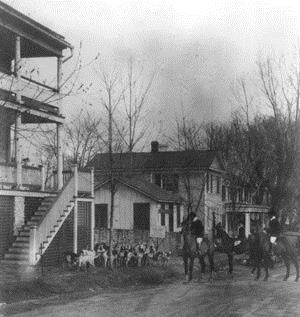
RECOVERY & TRADITION
1887 — The Middleburg Inn
- Renamed and continues uninterrupted operation
- Serves as a center of village and sporting life
Late 1800s — Hunt Country Emers
- Foxhunting and horse breeding flourish
- Middleburg earns its reputation as America’s hunt country
- The inn anchors social and sporting traditions
1937–1975
A MODERN NAME, A NATIONAL STAGE
1937 — The Red Fox Inn & Tavern
- Saved from demolition by a local citizen
- Remodeled by architect William Dew
- Renamed The Red Fox Inn & Tavern in tribute to the region’s hunting heritage
1930s–1960s — Quiet Prominence
- Middleburg becomes a discreet retreat for leaders and cultural figures including:
- John F. Kennedy, who held a press conference at the inn
- Jacqueline Kennedy Onassis, a frequent fall visitor
- Elizabeth Taylor, who dined regularly during her courtship and marriage to John Warner
- Additional guests include Paul Newman, Joanne Woodward, Tom Cruise, and Robert Duvall

1937–1975
A MODERN NAME, A NATIONAL STAGE
1937 — The Red Fox Inn & Tavern
- Saved from demolition by a local citizen
- Remodeled by architect William Dew
- Renamed The Red Fox Inn & Tavern in tribute to the region’s hunting heritage
1930s–1960s — Quiet Prominence
- Middleburg becomes a discreet retreat for leaders and cultural figures including:
- John F. Kennedy, who held a press conference at the inn
- Jacqueline Kennedy Onassis, a frequent fall visitor
- Elizabeth Taylor, who dined regularly during her courtship and marriage to John Warner
- Additional guests include Paul Newman, Joanne Woodward, Tom Cruise, and Robert Duvall

The Red Fox Inn & Tavern Team 1979
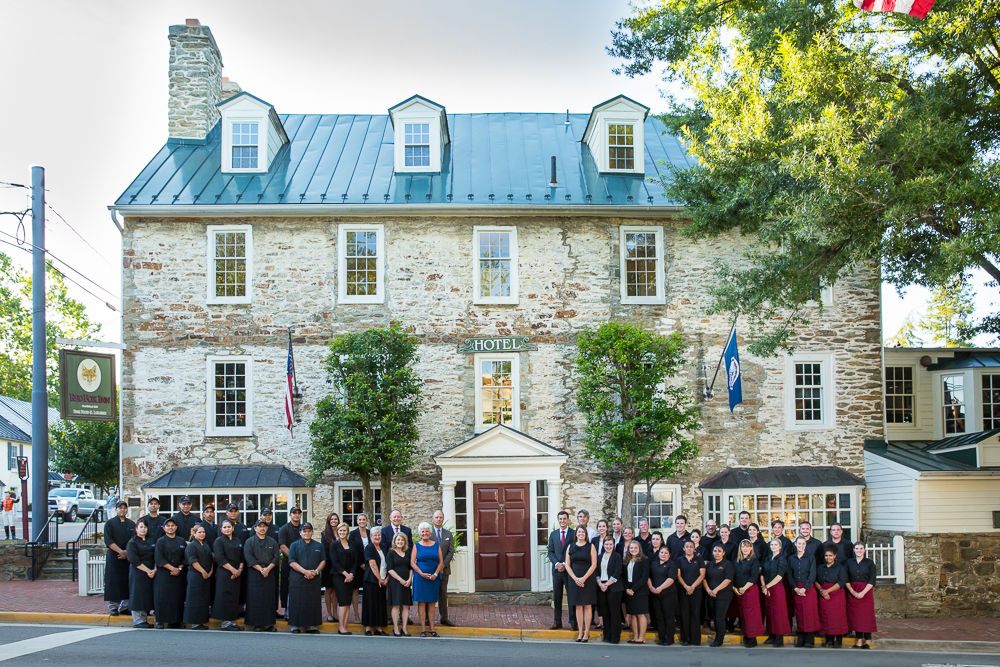
The Red Fox Inn & Tavern Team 2016
1976–PRESENT
STEWARDSHIP & CONTINUITY
1976 — Reuter Family Stewardship Begins
- Purchased by Nancy B. Reuter
- Acquired during a period when many historic inns face decline
- A preservation-first philosophy is established
1979 — A Working Inn Renewed
- Turner Reuter, Jr. assumes operations
- Expands and renovates with restraint
- Architectural integrity and historic character carefully protected
2008 — Third-Generation Stewardship
- Matilda Reuter Engle joins the stewardship of The Red Fox Inn & Tavern
- Represents the third generation of Reuter family leadership
- Brings a renewed focus on heritage, storytelling, and long-view custodianship—ensuring the inn remains both relevant and rooted
Today — 300 years on
- The Red Fox Inn & Tavern remains a working inn and tavern
- A living landmark shaped by use, memory, and care
- History experienced not as nostalgia, but as continuity
- Stewarded for the fourth century with the same purpose that has guided the first three